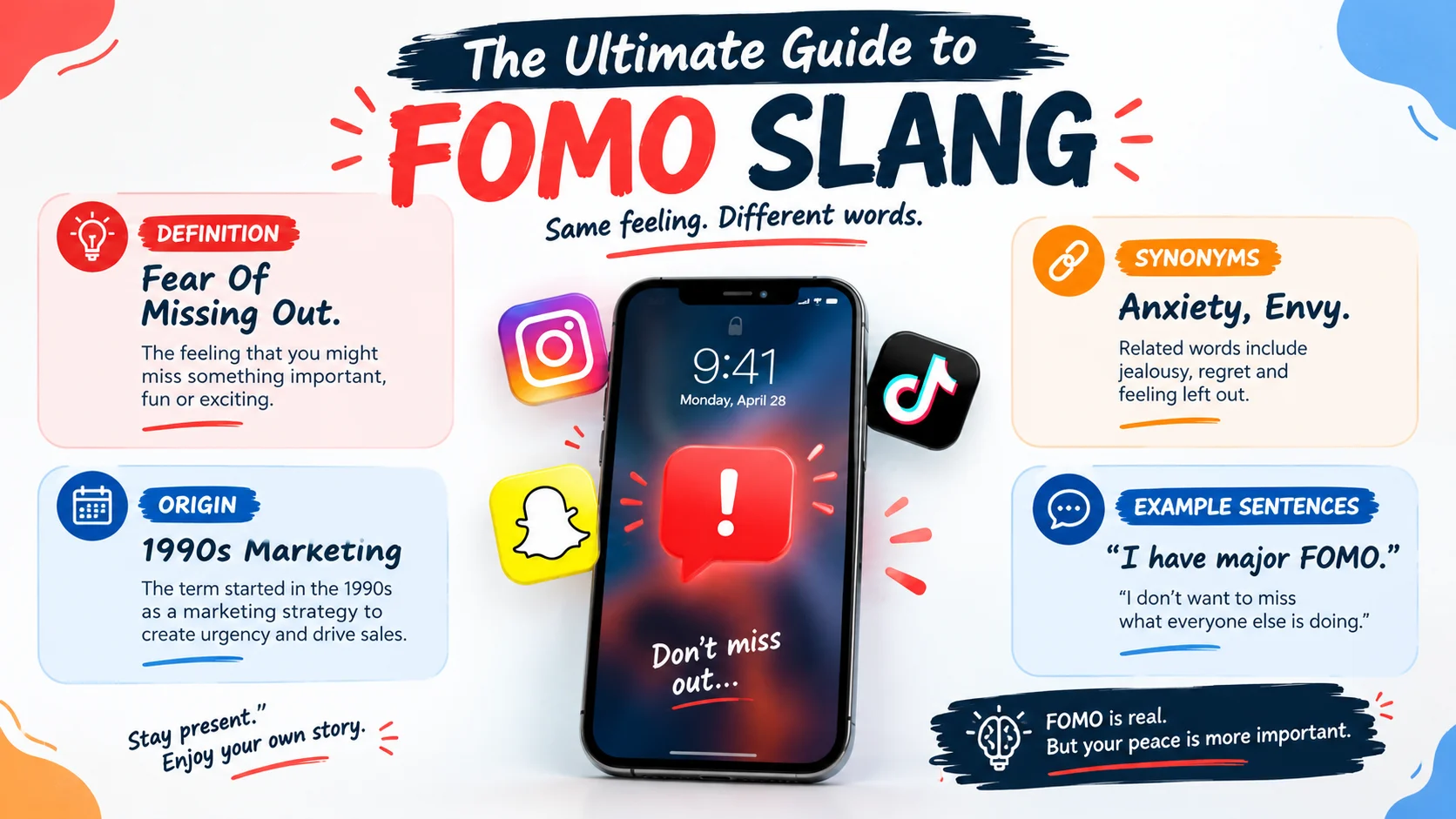
FOMO is a slang acronym that stands for “Fear Of Missing Out.” It describes the anxiety or unease you feel when you think others are having fun or experiencing something exciting without you. It’s a common feeling in the age of social media.
Understanding the fomo meaning slang is essential for navigating modern social dynamics, especially in the age of social media. Consequently, this acronym has become a universal term for a very specific and relatable anxiety. It captures that uneasy feeling when you see your friends having fun without you. For example, scrolling through Instagram and seeing a party you weren’t invited to can trigger a serious case of FOMO.
This comprehensive guide breaks down everything you need to know about the term. We will cover its definition, origins, platform-specific usage, and how to cope when you experience it. By the end, you will be fully equipped to understand this slang and manage your own FOMO.
QUICK ANSWER BOX
| Meaning | Context | Primary Platforms | Example | Tone |
| “Fear Of Missing Out” – anxiety about missing social experiences. | Used to describe the unease of being left out of fun events. | Instagram, TikTok, Snapchat, X (Twitter). | “I have major FOMO about that trip.” | Anxious, envious, and relatable. |
What Does FOMO Meaning Slang Entail?
At its core, fomo meaning slang stands for “Fear Of Missing Out.” It refers to the anxiety or unease you feel when you believe others are having rewarding experiences that you are not a part of. This feeling is often amplified by social media, where people constantly share highlights of their lives.
The term was coined by marketing strategist Dan Herman in 1996. However, it gained widespread popularity in the 2010s, largely due to the rise of social media platforms like Facebook, Instagram, and Snapchat. Consequently, it became a common topic in psychology and pop culture.
Furthermore, FOMO is not just a casual feeling; it can have real psychological effects. Studies have shown that it can lead to increased anxiety, depression, and even compulsive social media use. Understanding the term is the first step in managing its impact on your mental health.
Contextual Dynamics & Nuances of the Term
The meaning of FOMO can manifest in various ways depending on the context and the individual’s personality. Understanding these nuances is key to recognizing and managing the feeling.
Social Events vs. Material Experiences
FOMO can occur when you miss a party or a social gathering. However, it can also happen when you see someone purchase a new product, travel to an foreign location, or achieve a milestone. The common thread is the perception that others are experiencing something positive that you are not.
Online vs. Offline FOMO
Social media is a primary driver of this feeling. Seeing curated, idealized versions of other people’s lives can trigger feelings of inadequacy. However, FOMO can also occur offline. For example, hearing coworkers talk about a fun weekend activity you weren’t part of can induce the same feeling.
The “Fear” Component
The “F” in FOMO stands for “Fear.” This is important because it elevates the feeling from simple envy to actual anxiety. It’s not just that you want to be there; you fear that you are missing out on something important or that your social standing is suffering.
Real-Life Conversation Examples Using FOMO
To truly grasp how fomo meaning slang is used in the wild, it helps to see it in natural dialogue. Here are five distinct chat scenarios that showcase its versatility.
Scenario 1: Seeing Friends on Social Media
Person A: “Did you see the Instagram story from the party last night?”
Person B: “Yeah, I’m having major FOMO right now. I should have gone.”
Person A: “Same. It looked so fun.”
Scenario 2: Missing a Trip
Friend 1: “We’re booking the cabin for the summer.”
Friend 2: “I can’t come, I have work.”
Friend 1: “That’s a bummer. You’re going to have so much FOMO.”
Scenario 3: A New Product Drop
Gamer 1: “Did you see the new game release?”
Gamer 2: “Yeah, but I can’t afford it right now.”
Gamer 1: “I’m already getting FOMO seeing everyone play it online.”
Scenario 4: Work Event
Colleague 1: “Are you going to the company happy hour?”
Colleague 2: “I can’t, I have to pick up my kids.”
Colleague 1: “You’ll have FOMO. Everyone’s going to be there.”
Scenario 5: General Catch-Up
Person A: “What did you do this weekend?”
Person B: “Nothing much, just stayed home.”
Person A: “We went to the beach. It was amazing.”
Person B: “Ugh, now I have FOMO.”
Platform-Specific Breakdown
The usage of fomo meaning slang varies slightly depending on the social media platform. Here is how it is typically used across the most popular apps.
How It Is Used on Snapchat
On Snapchat, FOMO often appears in captions or in response to Stories. Users frequently post snaps of their fun activities, and viewers might reply “FOMO” in a chat. It’s a quick way to express envy and engagement with the content.
The Role of FOMO on TikTok
TikTok has been instrumental in spreading awareness of the term. The platform is a hub for viral trends and experiences. Consequently, the term appears in millions of videos and comments. Creators often make content about their own experiences with this feeling.
Instagram and Texting Dynamics
On Instagram, FOMO is heavily featured in comments and Stories. Users often comment “FOMO” on posts showing fun events or new purchases. In texting, it’s used to express envy. For instance, a friend might text you a photo of their vacation, and the response could be, “FOMO is real right now.”
Alternative Meanings & NLP Variations of the Phrase
While we have focused on the slang definition, it is important to note that FOMO has some related and alternative meanings.
The Psychological Term
In psychology, FOMO is recognized as a real phenomenon. It’s studied in relation to social media use, mental health, and consumer behavior. It’s considered a form of social anxiety.
The Marketing Term
Marketers frequently use the concept of FOMO to drive sales. Limited-time offers and exclusive deals are designed to trigger this feeling and encourage people to buy.
The Business Context
In business, FOMO can also refer to the fear of missing out on investment opportunities or market trends. It can drive irrational decision-making.
Misinterpretations: When NOT to Use FOMO
Using FOMO in the wrong context can lead to misunderstandings. Here are a few scenarios where you should avoid the term.
Professional Settings
FOMO is informal. Using it in a professional environment, such as in an email to a boss, might not be appropriate. Stick to formal language in these settings.
When Expressing Genuine Sadness
If you are genuinely sad about missing an event, saying “I have FOMO” might sound too casual. It’s better to express your feelings directly.
With People Unfamiliar with Slang
If you are talking to someone older or someone who doesn’t follow current slang, using the term might confuse them. It’s better to explain the feeling rather than use the acronym.
How to Respond in Chat Comfortably
If someone tells you they have FOMO in a chat, your response should depend on the context and your relationship with the person. Here are a few ways to handle it.
Validate Their Feelings
The simplest and most empathetic response is to validate their feelings. You can say, “I understand. I would feel the same way.” This shows you are listening and empathetic.
Include Them
If possible, you can try to include them. You might say, “I’ll send you pictures,” or “We’ll do it again soon.” This can help alleviate their anxiety.
Change the Subject
If the conversation is making them feel worse, you can gently change the subject. You might say, “Don’t worry about it. What are you up to this weekend?”
FAQs
What does FOMO mean in slang?
FOMO is a slang acronym that stands for “Fear Of Missing Out.” It describes the anxiety of feeling left out.
Is FOMO a real thing?
Yes, it is a recognized psychological phenomenon. It can affect your mental health and decision-making.
Where did the slang FOMO come from?
The term was coined by marketing strategist Dan Herman in 1996. It gained widespread use with the rise of social media.
What does FOMO mean on social media?
On social media, FOMO refers to the anxiety you feel when you see others having fun without you.
What does FOMO mean on Snapchat?
On Snapchat, FOMO is used in chats and captions to express envy when seeing friends have fun.
How do you use FOMO in a sentence?
You can say, “I have major FOMO about missing that party,” or “Seeing those vacation photos gave me FOMO.”
Is FOMO a bad thing?
Yes, it can be negative. It can lead to anxiety, depression, and compulsive social media use.
How can I deal with FOMO?
You can limit social media use, practice mindfulness, and focus on your own life. It’s also helpful to remember that social media is a highlight reel.
What if someone says they have FOMO?
It means they feel left out. You can validate their feelings and try to include them or change the subject.
Is FOMO a slang word?
Yes, FOMO is a modern slang acronym that has become a common part of everyday language.
Conclusion
Understanding fomo meaning slang offers a fascinating glimpse into how language evolves in the digital age. What started as a marketing term has become a universally recognized acronym for a common psychological experience. Propelled by social media and the innate human desire for connection, the term has cemented its place in modern vocabulary. While Meta Elementsthe term describes a negative feeling, its recognition can help people manage their anxiety.
As with any slang, the key to using FOMO effectively lies in using it appropriately and empathetically. When used correctly, it can be a powerful way to connect with others and express a shared experience. As digital communication continues to shape our language, terms like FOMO remind us that language is a living, breathing entity that adapts to the times.

Sara Mitchell is a content writer at Punzite.com who specializes in internet slang, word meanings and language trends. She creates clear, engaging and well-researched content that helps readers understand modern digital communication with ease.